Your health and comfort largely depends on the type of indoor air quality you are surrounded by. Knowing about the different types of filters used in HVAC systems can help you improve the air quality, reduce energy waste, and create indoor environments that are significantly healthier.
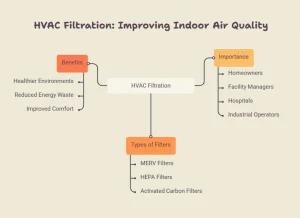
HVAC filtration is important for almost everyone, including homeowners, facility managers, hospitals, and industrial operators. For anyone managing a residential property, commercial facility, or specialized cleanrooms, here’s an ultimate guide on this topic.
What is an HVAC System & How Do Filters Fit In?
HVAC stands for Heating, Ventilation, and Air Conditioning. An HVAC system controls heating, ventilation, and air conditioning within a building.
HVAC filters act as the first line of defense against airborne contaminants and prevent dust, pollen, mold spores, and other particles from circulating through occupied spaces.
Where Filters Are Located in the HVAC System Diagram:
Filters are installed near the return air duct or inside the air handler.
Indoor Unit vs Outdoor Unit: What Each Does
The indoor unit handles air circulation, cooling, heating, and filtration.
On the other hand, the outdoor unit contains the condenser and compressor responsible for heat exchange.
The Air Flow Path of Return Air to Supply Vent
- Air enters through return vents
- It then passes through the filter
- After that, the air moves across heating or cooling components
- The air is then distributed back into rooms through supply vents
Why Different Types of Filters Used in HVAC Systems Matter in 2026
As modern buildings are being designed to minimize energy loss, they can also trap up pollutants inside if there’s no proper filtration.
Indoor Air Pollution Statistics You Should Know
There are higher concentrations of pollutants such as dust, allergens, VOCs, bacteria, and smoke particles present in indoor air which results in the poor quality of air.
Health Impact of a Dirty or Wrong Filter
Dirty filters reduce airflow and allow contaminants to circulate throughout the building, worsening allergies, asthma symptoms, respiratory irritation, and overall occupant comfort.
How HVAC Filters Are Rated (with MERV, MPR, and FPR Explained)
HVAC filters have a rating system which can help you when choosing one for your space. But what do these ratings mean? We explain it here:
What is a MERV Rating?
MERV stands for Minimum Efficiency Reporting Value. MERV rating measures how effectively a filter captures airborne particles.
MERV 1–4: Basic Protection
The primary purpose of filters with a MERV 1 – 4 rating is to protect the HVAC equipment. These filters capture large particles of lint and dust.
MERV 8–13: Best for Most Homes
Filters of this rating, MERV 8 — 13, offer the best balance between filtration and airflow for residential use. These filters capture dust, pollen, mold spores, pet dander, and many airborne contaminants.
MERV 14–20: Hospital and Industrial Grade
HVAC filters with MERV 14 – 20 are of high-efficiency and capture extremely small particles and are used in hospitals, laboratories, and clean manufacturing environments.
MPR and FPR Ratings: Are They the Same as MERV?
MERV is the industry standard for comparing filters across brands. MPR and FPR are rating systems developed by manufacturers.
MPR (Microparticle Performance Rating) measures how well a filter traps the tiny particles in size. It’s best for people who have asthma or severe allergies and need air devoid of tiny particles that can trigger their condition.
FPR (Filter Performance Rating) measures how well a filter traps large particles and small particles such as dust and smoke.
High MERV Ratings and Airflow Restriction
Higher filtration efficiency often creates greater airflow resistance. If you install a filter with a MERV rating beyond your system’s design specifications, it can reduce efficiency and increase equipment strain.
Types of Filters Used in HVAC Systems
These are the types of filters that are used in HVAC systems:
1. Fiberglass Filters
Fiberglass filters use layered fibers to capture larger airborne particles.
Advantages |
Disadvantage |
Best Suited for |
| Inexpensive | Filtration performance is limited | Budget-conscious projects and consumers |
| Provide minimal airflow |
2. Pleated Filters
Pleated filter is the type of air or liquid filter. It captures a lot of debris while letting air or liquid easily flow in.
Advantages |
Disadvantage |
Best Suited for |
| Provide excellent filtration efficiency | Residential HVAC systems | |
| Longer service life | ||
| Improve air quality indoors |
3. HEPA Filters
HEPA (High-Efficiency Particulate Air) filters remove at least 99.97% of particles measuring 0.3 microns.
Can You Use a HEPA Filter in a Residential HVAC?
You cannot use true HEPA filters in residential units without any modifications if your residential unit hasn’t been designed to airflow resistance.
4. Electrostatic Filters
Electrostatic filters use static electricity that’s generated by moving air. These filters attract and trap airborne particles including dust and pollen.
These filters are washable and disposable. The disposable versions have to be regularly replaced. Whereas, the washable models can be reused simply after cleaning.
Pros, Cons, & Maintenance Tips for Washable Electrostatic Filters |
||
Advantage |
Disadvantage |
Maintenance Tip |
| These filters effectively attract particles using static electricity | Disposable filters have to be replaced regularly. | Require consistent maintenance to maintain performance |
| Washable options reduce waste | ||
5. Activated Carbon / Charcoal Filters
Activated carbon/charcoal filters are great for removing any odours, chemical fumes, smoke particles, and chlorine. But these filters cannot trap physical dust or germs.
Usually these filters get paired with HEPA filters to remove any strong odours of cooking, pets, and smoke. They are also paired with water filtration to improve water’s drinking quality and reduce chlorine and bad smelling organic chemicals.
6. UV Light Filters: How UV Filters Kill Bacteria and Mold
UV light filters kill harmful bacteria and mold present in air.
Are UV Filters Worth the Cost in 2026?
For facilities concerned about microbial contamination, UV filters can definitely be worth the cost.
7. Media Filters (4 – 5 Inch Deep Filters)
Media Filters vs Standard 1-Inch Filters
Media filters offer significantly more filtration surface area and longer service intervals and maintain good airflow performance.
8. Smart Filters with IoT and AI Monitoring (2026 Update)
Embedded sensors monitor pressure drop, airflow, and contamination levels in real time.
Best Smart Filter Products Available in 2026
Leading manufacturers now offer connected filtration systems that integrate with building management platforms and provide predictive maintenance alerts.
HVAC Filter Comparison Table
| Filter Type | MERV Range | Particle Size Captured | Cost | Lifespan | Best For |
| Fiberglass | 1 – 4 | Large particles | Low | 30 days | Equipment protection |
| Pleated | 8 – 13 | Dust, pollen, pet dander | Moderate | 60 – 90 days | Most homes |
| HEPA | 17 – 20 | Ultra-fine particles | High | 6 – 12 months | Hospitals |
| Electrostatic | 6 – 12 | Dust and allergens | Moderate | Washable | Eco-conscious users |
| Carbon | Varies | Odors and VOCs | Moderate | 3 – 6 months | Smoke and odor control |
| UV Systems | N/A | Microorganisms | High | Annual lamp replacement | Mold prevention |
| Media Filters | 11 – 16 | Fine particles | Moderate to High | 6 – 12 months | Whole-home filtration |
| Smart Filters | Varies | Depends on media | High | Varies | Smart buildings |
VCD in HVAC System: What It Is & Why It Even Matters
VCD (Volume Control Damper) components in an HVAC system automatically adjust airflow to different rooms. This saves energy and keeps your home or office at a steady and comfortable temperature.
What is a Volume Control Damper (VCD)?
A VCD in HVAC system design is a mechanical device installed inside ductwork to regulate airflow volume.
How a VCD Controls Airflow in HVAC Ducts
You can adjust the damper blade to increase or restrict airflow passing through specific duct sections.
Manual VCD vs Motorized VCD (MVCD)
Manual VCDs require physical adjustment. In contrast, motorized versions use actuators for automated airflow control.
How VCDs and Filters Work Together
This is how VCD works together will HVAC filters:
Airflow Balancing with VCDs
VCDs balance the airflow so every zone receives adequate conditioned air and filtration effectiveness is maintained.
How Wrong Airflow Reduces Filter Efficiency
Filter efficiency can be reduced by the wrong kind of airflow. Excessive airflow can force particles through filters whereas insufficient airflow reduces the overall performance of your HVAC system.
VCD vs Other HVAC Dampers
The Key Differences between Fire Damper vs Volume Control Damper
Fire dampers prevent fire spread through ductwork. On the other hand, VCDs regulate airflow.
Where Are VCDs Installed?
In a standard HVAC system diagram, VCDs are located at branch duct connections.
How You Can Choose the Right HVAC Filter for Your Situation
Depending on your space and specific situation, the right HVAC filter will vary. Here’s how you can make the informed choice:
For Homes with Allergy Sufferers or Asthma Patients
If your home has people suffering from allergies or asthma patients, then you should choose MERV 11 to 13 pleated filters.
For Pet Owners
If you have pets, then filters rated MERV 8 to 13 are quite effective at capturing pet hair and dander.
For Wildfire-Prone Areas (2026 Context)
If you live in an area that’s very prone or susceptible to wildfires, then you should install higher-efficiency filters combined with activated carbon media to help reduce smoke particles and odours.
For Commercial and Industrial Buildings
If you are installing an HVAC system in a commercial or industrial building, you can get the best balance between safety and operational efficiency with media filters and high-MERV filtration systems.
For Pharmaceutical Cleanrooms
Multi-stage filtration systems incorporating prefilters, bag filters, and HEPA filters are best for contamination control and are suitable for pharmaceutical classrooms.
HVAC Filter Maintenance & What Most People Get Wrong
This is what you should know about maintenance for your HVAC filter:
How Often Should You Replace Your HVAC Filter?
Your filter type, occupancy, and environmental conditions impact how often you should be replacing your HVAC filters and what your replacement schedule should be.
Replacement Frequency by Filter Type
This is the replacement frequency by different filter types:
- Fiberglass filters require monthly replacement
- Pleated filters can last two to three months
- Media filters often last six to twelve months
Signs Your HVAC Filter Needs Immediate Replacement
Your HVAC might be in the need of immediate replacement if it’s showing any of the following signs:
- Reduced airflow
- increased dust accumulation
- unusual energy bills
- visible dirt buildup
How a Clogged Filter Damages Your HVAC System
A clogged filter can be detrimental to your HVAC system. It’s because restricted airflow forces equipment to work harder which increases wear on motors, blowers, and compressors and reduces efficiency.
How to Read Airflow Direction Arrows on a Filter
The arrow should always point toward the air handler or furnace, matching the direction of airflow.
Which HVAC Filter is Right for YOU?
| Situation | Recommended Filter |
| General Residential Use | Pleated MERV 8 – 13 |
| Allergy Relief | Pleated MERV 11 – 13 |
| Pet Owners | Pleated MERV 8 – 13 |
| Hospitals | HEPA |
| Industrial Facilities | Media Filters |
| Pharmaceutical Cleanrooms | Multi-Stage HEPA Systems |
| Odour Control | Activated Carbon |
Experience the Best Indoor Air Quality with ConnectFM
The best HVAC filter for your space depends on what your indoor air quality goals are, the HVAC system capacity you are looking for, and your maintenance preferences. A quality pleated filter with a MERV rating between 8 and 13 provides the best balance of performance and efficiency for most homes.
If you are looking to upgrade your existing HVAC, consult our specialists to make sure your filters and VCD airflow controls work together for maximum comfort, air quality, and energy savings.
Book a consultation with our team of HVAC experts.
Frequently Asked Questions (FAQs)
What is the most common type of filter used in HVAC systems?
Pleated filters are the most common type of filter used in HVAC systems.
What MERV rating should I use for my home?
For your home, you should use MERV 8 to 13 filters.
Can I use a HEPA filter in my residential HVAC system?
You can use a HEPA filter in your residential HVAC system only if your system is designed specifically to accommodate the additional airflow resistance.
What does VCD mean in an HVAC system?
VCD stands for Volume Control Damper. It is a mechanical valve or plate installed inside air ducts to regulate, balance, and control the amount of airflow moving through a specific section of the HVAC system.
How does a volume control damper affect filter performance?
A volume control damper (VCD) restricts airflow to balance your system. Closing the VCD can create turbulence and increase pressure, and if it is left closed too long, it can cause uneven dirt buildup and reduce the filter’s trapping efficiency.
What is the difference between MERV 8, MERV 11, and MERV 13?
The difference between MERV 8, 11, and 13 is that higher ratings capture smaller particles.
Are washable HVAC filters better than disposable ones?
Washable HVAC filters reduce the amount of waste that disposable ones have. But washable HVACs also require consistent maintenance to maintain their effectiveness.
How do smart HVAC filters work in 2026?
Smart HVAC filters use sensor and AI-powered monitoring to track filter condition and airflow performance.
How do I read an HVAC system diagram?
You can read an HVAC system diagram by following the airflow path from return vents through filters, conditioning components, and supply ducts.
What filters are used in pharmaceutical HVAC systems?
Pharmaceutical HVAC systems use bag filters, HEPA filters, and multi-stage filtration systems.

Priority support
Regular inspections
Reduced repair costs
Improved system reliability