A hidden water leak in Dubai can quietly drain thousands of dirhams from your wallet before you even notice a single wet spot. One small crack behind a wall, a damaged pipe under the floor, or a leaking AC drain line can keep wasting water 24/7 — increasing your DEWA bill and slowly damaging your property.
That is exactly why a water leak detection system in Dubai has become less of a luxury and more of a smart property protection investment in 2026.
Whether you own a luxury villa in Palm Jumeirah, manage an apartment in Downtown Dubai, operate a hotel, or run a data center, early leak detection can save you from expensive repairs, business interruptions, and unnecessary water consumption.
Discover how water leak detection systems work, the different technologies available in Dubai, installation costs in 2026, DEWA smart meter integration, and how to choose the right solution for your property.
What Is a Water Leak Detection System?
A water leak detection system is a technology designed to identify unwanted water leaks in plumbing systems, pipelines, equipment, and hidden areas before they cause serious damage.
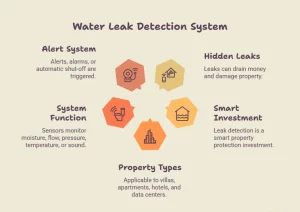
The system uses sensors to monitor moisture, water flow, pressure changes, temperature variations, or sound vibrations that indicate a leak. Once abnormal activity is detected, the system can send an alert, trigger an alarm, or automatically shut off the water supply depending on the type of system installed.
Simply put, it acts like a 24/7 security guard for your plumbing system — watching every drop even when nobody is home.
How Does It Work?
The working principle depends on the type of water leak detection technology being used.
Most residential systems use small moisture sensors placed near high-risk areas. When water touches the sensor, it immediately sends a notification to the property owner through a mobile application or activates a local alarm.
More advanced systems continuously monitor water flow and pressure patterns. Artificial intelligence can learn normal usage habits and identify unusual consumption, such as water running continuously during the middle of the night.
In commercial buildings and industrial facilities, cable-based, acoustic, and thermal imaging technologies can detect hidden leaks behind walls, beneath raised floors, or inside large pipe networks.
What Problems Does It Solve in Dubai Specifically?
Dubai’s modern infrastructure faces unique environmental challenges. Extreme temperatures, high humidity, coastal salinity, and high-rise construction create conditions where plumbing systems experience significant stress.
A properly designed leak detection system helps identify these issues before they become costly emergencies.
High Temperatures and Pipe Stress Cycles
Dubai’s summer temperatures regularly exceed 45°C, causing continuous expansion and contraction of plumbing materials. These thermal stress cycles can weaken joints, seals, and pipe connections over time.
Hidden leaks often begin as tiny cracks that remain unnoticed for weeks or months, especially inside walls, ceilings, or underground pipelines.
A leak detection system provides early warning before a small weakness turns into a major water damage incident.
Saltwater Corrosion in Coastal Areas Like Palm Jumeirah
Properties near the coastline, including areas like Palm Jumeirah, face higher exposure to salty air.
Salt particles can accelerate corrosion of certain metal components, especially in older plumbing installations or external water systems. Over time, this corrosion can lead to pipe deterioration, small leaks, and unexpected failures.
Installing smart monitoring systems helps coastal property owners detect these problems early instead of discovering them after visible damage appears.
Slab Leaks in High-Rise Buildings
Dubai’s skyline is filled with residential towers, hotels, and commercial skyscrapers where many plumbing lines are embedded within concrete slabs.
A leak inside these hidden pipes can travel through walls and floors, damaging electrical systems, interiors, and neighboring units before the source is identified.
Advanced leak detection technologies such as acoustic sensors and thermal imaging allow technicians to locate these hidden leaks with minimal demolition.
Types of Water Leak Detection Systems Available in Dubai
Not all water leak detection systems work the same way. The right choice depends on your property size, plumbing complexity, budget, and the level of protection required.
From simple sensors under your kitchen sink to AI-powered building monitoring platforms, Dubai’s market offers solutions for every environment.
Spot Sensors — Best for Targeted Areas
Spot sensors are the most common and affordable form of water leak detection.
These compact devices are installed directly in areas where leaks are most likely to occur, such as under sinks, behind washing machines, near water heaters, under AC units, and close to dishwashers.
When water comes into contact with the sensor, it immediately triggers an alarm or sends a notification to your smartphone.
They are ideal for apartments and villas where property owners want simple protection without installing a complete monitoring network.
Cable Sensors — Best for Large Spaces and Data Centers
Cable leak detection systems use a specially designed sensing cable that can detect moisture anywhere along its entire length.
Unlike spot sensors that only monitor one location, cable systems can cover hundreds of meters of space.
They are commonly installed in:
- Data centers
- Server rooms
- Electrical rooms
- Hotel basements
- Mechanical areas
- Long piping routes
Because critical equipment in these environments can suffer severe damage from even a small water leak, continuous monitoring is essential.
Smart (IoT-Based) Water Leak Detection Systems
Smart water leak detection systems represent the most advanced category available in Dubai in 2026.
These systems combine connected sensors, cloud technology, mobile applications, and automated controls to provide real-time monitoring from anywhere in the world.
They are especially popular among smart homes, luxury villas, commercial buildings, and facilities that require 24/7 protection.
WiFi-Connected Sensors
WiFi-based water leak sensors are among the most popular smart solutions for homes and small commercial properties in Dubai.
These devices connect directly to your home or office internet network and send instant alerts to a mobile application whenever a leak is detected. Whether you are at work, travelling abroad, or away for the weekend, you receive real-time updates about your property’s water status.
Modern WiFi sensors can also provide additional features such as:
- Low battery notifications
- Temperature and humidity monitoring
- Leak history reports
- Integration with smart home platforms
- Custom alert settings for different family members or facility managers
For apartments and villas, WiFi sensors provide a simple and cost-effective first step towards complete water protection.
NB-IoT and LoRaWAN Systems for Commercial Buildings
Large commercial facilities require a more powerful communication network than standard WiFi.
This is where NB-IoT (Narrowband Internet of Things) and LoRaWAN (Long Range Wide Area Network) leak detection systems become valuable. These technologies are designed for long-distance communication while consuming very little power.
They are commonly used in:
- Office towers
- Hotels
- Shopping malls
- Warehouses
- Hospitals
- Industrial facilities
A major advantage is their ability to cover large areas, including basements, utility rooms, underground pipelines, and locations where WiFi signals may be weak.
For Dubai’s large-scale developments and smart buildings, NB-IoT and LoRaWAN technologies support continuous monitoring without requiring extensive network infrastructure.
Wireless Systems With Auto Shut-Off Valves
Detecting a leak is useful. Stopping it automatically is even better.
Advanced wireless water leak detection systems can connect to a motorized shut-off valve installed on the property’s main water supply line.
When the system identifies abnormal water flow or receives a leak signal from a sensor, it can immediately close the valve within seconds.
This prevents situations where:
- A burst pipe floods a villa while the owners are overseas
- A leaking water heater damages an apartment overnight
- A broken pipe causes significant damage in a hotel room before staff discover the issue
For high-value properties in Dubai, automatic shut-off functionality provides an extra layer of protection and reduces the chances of expensive restoration work.
Acoustic and Thermal Imaging Systems (Non-Invasive)
Not every leak appears as a puddle on the floor. Some of the most expensive leaks remain hidden behind walls, under concrete slabs, or inside underground pipelines.
Acoustic and thermal imaging technologies help technicians find these hidden problems without breaking walls or flooring unnecessarily.
Acoustic leak detection uses highly sensitive microphones to listen for the sound of water escaping from pressurized pipes.
Thermal imaging uses infrared cameras to identify temperature differences caused by moisture, water movement, or changes in surface temperature.
These methods are especially useful for:
- High-rise apartments
- Luxury villas
- Hotels
- Commercial buildings
- Underground pipe networks
Because they are non-invasive, property owners avoid unnecessary demolition, reducing repair time and restoration costs.
Smart Water Leak Detection System – What Makes It “Smart”?
A standard leak alarm tells you there is a problem after water reaches the sensor.
A smart water leak detection system goes much further. It monitors your property continuously, analyzes water usage patterns, provides remote access, and can even take action automatically before major damage occurs.
In a city like Dubai, where many residents travel frequently and many properties remain unoccupied for long periods, smart monitoring provides peace of mind regardless of location.
Real-Time Alerts and App Notifications
The biggest advantage of smart leak detection is instant communication.
The moment unusual activity occurs, the system can send notifications through:
- Smartphone applications
- SMS messages
- Email alerts
- Building management dashboards
For example, if a villa’s irrigation pipe bursts at 2 AM while the owner is abroad, the owner receives an immediate warning rather than discovering the problem after returning home.
Some advanced platforms also provide detailed information such as the exact sensor location, water consumption patterns, and the severity of the leak.
Automatic Water Shut-Off: How It Prevents Damage Instantly
Speed is everything when a leak happens.
A pipe releasing only a few litres of water every minute can cause thousands of dirhams in damage over several hours.
Smart systems connected to automatic shut-off valves can isolate the water supply immediately after detecting a serious leak.
This feature is particularly valuable for vacation homes, luxury villas, empty apartments, hotels, server rooms, and critical facilities.
Instead of relying on someone to manually turn off the water supply, the system reacts automatically within seconds.
Integration With Building Management Systems (BMS)
Modern commercial buildings in Dubai increasingly operate through centralized Building Management Systems (BMS).
A smart leak detection system can integrate with the BMS platform, allowing facility managers to monitor water leaks alongside:
- HVAC systems
- Electrical systems
- Fire alarms
- Security systems
- Energy consumption
This centralized monitoring improves response times and enables maintenance teams to resolve issues before they escalate.
How Smart Systems Connect to DEWA’s Smart Meter Network in 2026
Dubai has significantly advanced its smart utility infrastructure, with DEWA smart meters providing property owners with detailed water consumption data.
However, there is an important difference between a smart meter and a dedicated leak detection system.
DEWA High Water Usage Alert — and Where It Falls Short
DEWA smart meters can notify users about unusual increases in water consumption, helping them identify potential leaks.
However, the alert generally occurs after excessive water usage has already been recorded.
For example, if a hidden pipe leak runs continuously for several hours or days, significant water loss may happen before a high-usage pattern becomes obvious.
A smart meter monitors overall consumption, not the exact location of a leak.
Why a Private Smart Sensor Fills the Gap
A dedicated smart water leak detection system works at the source.
Instead of waiting for your monthly bill or a high-consumption alert, sensors detect moisture, pressure changes, or abnormal flow the moment a problem begins.
The combination of DEWA smart metering and private leak detection gives Dubai property owners complete visibility:
- DEWA shows how much water you consume
- Smart sensors show where and when a leak starts
- Automatic valves stop damage before it spreads
This shift from reactive repair to proactive prevention is why smart leak detection is becoming a standard feature in modern Dubai properties.
Where Do You Need a Water Leak Detection System in Dubai?
Every property has areas where water damage is more likely to occur. The correct sensor placement determines how effectively a leak detection system protects your home or building.
The risk areas vary between residential, commercial, and industrial environments.
Where Do You Need a Water Leak Detection System in Dubai?
A water leak can happen anywhere, but certain locations have a much higher risk due to continuous water flow, hidden pipe networks, or expensive equipment nearby.
Identifying these vulnerable zones and installing sensors in the right places ensures your water leak detection system delivers maximum protection.
Residential — Villas and Apartments
Dubai villas and apartments contain multiple hidden water sources that can leak without immediate visible signs.
A small leak inside a cabinet or behind a wall can continue for weeks before homeowners notice water stains, mould growth, unpleasant odours, or a sudden increase in their DEWA bill.
For residential properties, the most common areas for leak detection include:
Under Sinks, Near Water Heaters, Around AC Drain Lines
These are among the highest-risk locations inside a home.
- Kitchen and bathroom sinks: Loose pipe fittings and worn seals can slowly drip water into cabinets.
- Water heaters: Corrosion, pressure issues, or aging tanks may cause unexpected leaks.
- AC drain lines: Dubai’s heavy reliance on air conditioning means condensate drain blockages can lead to water overflow and ceiling damage.
Installing spot sensors in these areas allows homeowners to receive an alert long before the damage becomes visible.
Roof Terrace and Garden Irrigation Lines
Many villas in communities across Dubai have landscaped gardens, outdoor kitchens, and roof terraces with dedicated water lines.
Because these pipes are exposed to extreme temperatures and outdoor conditions, they can experience:
- Joint failures
- Cracked pipes
- Irrigation leaks
- Connection failures
Smart leak detection systems with flow monitoring are particularly useful for outdoor plumbing because they can detect continuous water consumption even when the leak is not visible.
Commercial — Offices and Hotels
For offices, hotels, retail spaces, and commercial towers, a water leak can cause much more than repair expenses.
It can result in:
- Business interruptions
- Damage to interiors and equipment
- Guest complaints in hotels
- Temporary closure of affected areas
- Higher maintenance costs
Commercial properties often use a combination of cable sensors, smart flow monitoring, and Building Management System (BMS) integration to monitor multiple floors and mechanical rooms from one centralized platform.
High-end hotels in Dubai particularly benefit from early leak detection because a single unnoticed leak can damage luxury interiors, electrical systems, and neighbouring rooms.
Industrial — Data Centers and Server Rooms
In a data center, even a small amount of water can create a major operational risk.
Servers, network equipment, power distribution units, and backup systems are highly sensitive to moisture. A leak beneath a raised floor can remain unnoticed until it causes equipment failure or service disruption.
Why Data Centers in Dubai Are High Risk
Dubai’s data centers depend heavily on cooling infrastructure to maintain stable operating temperatures.
These facilities contain:
- Chilled water pipes
- Cooling units
- Condensation systems
- Mechanical equipment
A failure in any of these systems can release water close to mission-critical equipment.
This is why data centers usually install continuous cable leak detection systems beneath raised floors and around cooling equipment, providing immediate alerts before moisture reaches valuable hardware.
District Cooling Chilled Water Lines
District cooling is widely used throughout Dubai’s residential and commercial developments.
These systems circulate chilled water through extensive piping networks to provide energy-efficient cooling.
While highly reliable, problems such as:
- Pipe corrosion
- Joint failures
- Valve leaks
- Condensation issues
can lead to hidden water loss and damage.
Continuous monitoring with cable sensors, flow meters, and smart monitoring platforms helps facility managers detect abnormalities early and maintain efficient system performance.
Water Leak Detection System Installation in Dubai — What to Expect
Installing a water leak detection system is usually a straightforward process, but the exact procedure depends on your property’s size, plumbing design, and the type of technology being installed.
A small apartment may only require a few wireless sensors, while a hotel or industrial facility may need hundreds of sensors connected to a centralized monitoring platform.
Step-by-Step Installation Process
A professional water leak detection installation generally follows these stages:
1. Site Survey and Risk Assessment
Technicians inspect the property to identify vulnerable areas, including plumbing routes, equipment rooms, water tanks, AC systems, and areas with a history of leaks.
2. System Design and Sensor Placement
Based on the assessment, the installer determines the best technology, sensor locations, communication method, and whether automatic shut-off valves are required.
3. Installation and Configuration
Sensors, cables, flow meters, and control units are installed and connected to the monitoring platform.
Smart systems are configured with:
- Mobile applications
- Alert preferences
- User access levels
- Notification methods
4. Testing and Commissioning
Before handover, technicians simulate leak scenarios to confirm that alarms, mobile alerts, and automatic shut-off functions work correctly.
How Long Does Installation Take?
Installation time depends on the complexity of the project.
| Property Type | Typical Installation Time |
| Studio or apartment | 1–3 hours |
| Villa | 1 day |
| Large villa with automation integration | 1–3 days |
| Office or retail space | 1–5 days |
| Hotel or industrial facility | Several days to several weeks |
Wireless smart systems are generally faster to install because they require minimal drilling or cabling.
Large commercial projects may take longer due to extensive sensor networks and integration with Building Management Systems.
Do You Need DEWA Approval for Installation?
In most cases, installing a residential water leak detection system does not require direct DEWA approval because the system operates on your private internal plumbing network.
Examples include:
- Under-sink leak sensors
- Wireless smart sensors
- Flow monitoring devices
- Automatic shut-off valves installed after the property’s main supply point
However, commercial and large-scale projects involving significant modifications to water infrastructure, new construction, or building management systems may require approvals from relevant authorities, developers, or project consultants.
A professional installer can advise whether your specific project requires any additional approvals.
Cost of Water Leak Detection System in Dubai (2026 Price Guide)
The cost of a water leak detection system in Dubai depends on the property size, number of sensors, level of automation, and monitoring requirements.
A basic apartment solution costs significantly less than a fully integrated commercial leak monitoring system.
NOTE: Costs mentioned in this guide are only indicative estimates for 2026 and may vary depending on property size, system type, installation complexity, brand selection, and specific project requirements.
Residential System Cost (AED Range)
For villas and apartments, typical 2026 pricing includes:
| System Type | Estimated Cost |
| Basic spot sensors | AED 150 – AED 600 per sensor |
| WiFi smart leak sensors | AED 300 – AED 1,000 per sensor |
| Smart system with automatic shut-off valve | AED 2,500 – AED 8,000+ |
Larger villas with multiple bathrooms, gardens, swimming pools, and irrigation systems may require additional sensors.
Commercial and Industrial System Cost (AED Range)
For commercial properties, pricing is usually based on the scale of monitoring.
Typical ranges include:
| Property Type | Estimated Cost |
| Small office | AED 5,000 – AED 15,000 |
| Hotel or commercial tower | AED 20,000 – AED 100,000+ |
| Data center and industrial facility | AED 50,000 – AED 250,000+ |
Custom engineering, BMS integration, and advanced monitoring software can influence the final project cost.
Ongoing Maintenance and Monitoring Fees
Like any safety system, leak detection requires regular testing and maintenance.
Typical annual expenses may include:
- Sensor battery replacement
- System health checks
- Software updates
- Calibration and testing
- Remote monitoring subscriptions
Depending on the system, maintenance costs typically range from AED 500 to AED 5,000+ per year.
A well-designed water leak detection system is not just an additional expense—it is a long-term investment that protects your property, prevents unexpected repair bills, and helps reduce unnecessary water waste.
How to Choose the Right Water Leak Detection System for Your Property
To choose the right water leak detection system in Dubai, you have to match the system with your property’s risks, size, and usage patterns.
A small apartment may only need a few smart sensors near vulnerable areas, while a luxury villa, hotel, or data center may require a complete monitoring network with automatic shut-off capability and Building Management System integration.
Key Questions to Ask Before Buying
Before investing in a water leak detection system, ask yourself these important questions:
- Where are the highest-risk leak areas in my property?
- Do I need alerts only, or should the system automatically stop the water supply?
- Is the property occupied all the time, or does it remain empty for long periods?
- How large is the area that requires monitoring?
- Do I need integration with a smart home platform or BMS?
- Will the system perform reliably in Dubai’s hot and humid climate?
- What are the long-term maintenance requirements?
Answering these questions helps you avoid paying for unnecessary features while ensuring complete protection where it matters most.
Cable Sensor vs Spot Sensor vs Smart System — Comparison Table
Each leak detection technology serves a different purpose. The best choice depends on the level of protection you require.
| Feature | Spot Sensors | Cable Sensors | Smart IoT Systems |
| Best for | Apartments, kitchens, bathrooms | Data centers, long pipelines, large rooms | Villas, commercial buildings, smart properties |
| Coverage | Single point | Continuous along cable length | Multiple sensors across entire property |
| Remote alerts | Some models | Usually with controller | Yes, via mobile app |
| Automatic shut-off | Limited | Possible with integration | Common feature |
| Installation complexity | Low | Medium to high | Medium |
| Cost | Lowest | Moderate to high | Moderate to premium |
| Ideal user | Homeowners wanting basic protection | Facility managers | Owners wanting full control and automation |
What to Look for in Dubai’s Climate (Heat, Humidity, Salinity)
Dubai’s environment creates unique challenges for plumbing systems and electronic equipment.
High Temperatures
Extreme summer heat can cause pipes to expand and contract repeatedly. Over time, this movement can weaken connections, seals, and fittings.
Choose leak detection equipment rated for high operating temperatures and suitable for outdoor installations if you plan to monitor gardens, rooftops, or external pipelines.
High Humidity
Humidity can cause condensation around AC systems, chilled water lines, and mechanical rooms.
A quality leak detection system should distinguish between normal environmental moisture and actual water leaks to avoid false alarms.
Salinity in Coastal Areas
Properties near the coastline, especially areas such as Palm Jumeirah, experience higher exposure to salt in the air.
Look for corrosion-resistant sensors, waterproof enclosures, and industrial-grade components designed to operate in harsh environments.
BREEAM WAT 04 Compliance — Is It Relevant to Your Project?
For large developments and sustainability-focused projects, water leak detection may contribute toward environmental building certifications.
BREEAM WAT 04 (Water Leak Detection and Prevention) encourages buildings to install systems that monitor water consumption, identify abnormal usage, and minimize unnecessary water loss.
It is particularly relevant for:
- Commercial buildings
- Hotels
- Educational facilities
- Healthcare buildings
- New sustainable developments
While homeowners may not require BREEAM compliance, developers and facility managers often consider it when aiming for higher sustainability ratings.
Benefits of Installing a Water Leak Detection System in Dubai
Water damage does not only mean a wet floor. It can lead to expensive repairs, higher utility bills, mold growth, damaged interiors, and disruption to your daily operations.
A modern water leak detection system provides financial protection, operational security, and better water management.
Protecting Your DEWA Bill from Hidden Leaks
One of the biggest advantages of early leak detection is avoiding unnecessary water costs.
A single leaking faucet wasting only 0.5 litres of water per minute can lose approximately 720 litres every day. Over a month, that can become more than 21,000 litres of wasted water, potentially adding over AED 1,200 to your monthly bill depending on the applicable water tariff and property category.
The biggest problem is that most hidden leaks continue unnoticed for weeks or even months.
Smart water leak detection systems identify abnormal usage immediately, allowing homeowners and facility managers to fix problems before the next DEWA bill arrives.
Avoiding Structural Damage and Insurance Claims
Water travels quickly through walls, ceilings, concrete slabs, and electrical pathways.
A hidden leak can cause:
- Paint damage and staining
- Warped wooden floors
- Damaged furniture
- Electrical safety risks
- Mold and unpleasant odors
- Damage to neighboring apartments
By detecting leaks during the earliest stages, you can prevent major restoration work and reduce the chances of expensive insurance claims.
Supporting Dubai’s Water Sustainability Goals
Dubai continues to invest in smarter and more sustainable resource management.
Installing a water leak detection system supports these goals by reducing unnecessary water waste and encouraging responsible consumption.
For commercial properties, hotels, and large developments, leak monitoring also supports sustainability initiatives, green building practices, and efficient facility management.
Why 2026 Is the Right Time to Install One in Dubai?
Waiting until a leak becomes visible is one of the most expensive ways to manage a property.
With DEWA’s smart infrastructure, rising maintenance costs, and increasing focus on water conservation, Dubai property owners are moving away from reactive repairs and adopting proactive monitoring.
Whether you own a small apartment, a luxury villa, a hotel, or a large commercial facility, a modern water leak detection system gives you something that repairs cannot provide: an early warning before damage happens.
In 2026, the smartest water investment is not fixing a leak after it floods your property—it is detecting and stopping it before the first drop causes a problem.
ConnectFM helps property owners across Dubai implement advanced water leak detection solutions that identify hidden leaks, reduce water wastage, and prevent costly structural damage before it occurs. By combining smart sensors, real-time monitoring, and professional facility management expertise, ConnectFM enables faster response times and greater peace of mind.
FAQs
What is the best water leak detection system for a villa in Dubai?
For most Dubai villas, a smart IoT-based water leak detection system with WiFi connectivity, multiple sensors, and an automatic shut-off valve provides the highest level of protection. It can monitor indoor plumbing, outdoor irrigation lines, swimming pool equipment, and water heaters while sending instant alerts to your smartphone.
How much does a water leak detection system cost in Dubai?
The cost depends on the type and size of the system. Basic leak sensors may start from around AED 150 per sensor, while complete smart systems with automatic shut-off valves typically range from AED 2,500 to AED 8,000 or more. Commercial and industrial systems can cost significantly higher depending on the complexity of the installation.
Can a smart water leak detection system connect to DEWA’s smart meter?
Smart leak detection systems do not replace DEWA smart meters but complement them. DEWA provides overall water consumption data and high-usage alerts, while private leak sensors detect the exact location and timing of a leak, allowing a much faster response.
Do I need a permit or DEWA approval to install a water leak detection system in Dubai?
Most residential installations, including wireless sensors and automatic shut-off valves installed within the property’s plumbing network, do not require direct DEWA approval. Larger commercial projects may require approvals from building authorities, developers, or project consultants.
What is the difference between a cable sensor and a spot sensor?
A spot sensor monitors one specific location, such as under a sink or near a water heater. A cable sensor monitors the entire length of a cable, making it suitable for large areas like data centers, mechanical rooms, and long pipeline routes.
How quickly does a smart leak detection system send alerts?
Most smart systems send alerts within seconds of detecting moisture, unusual flow, or pressure changes. Systems with automatic shut-off valves can also stop the water supply almost instantly to minimize damage.
Which areas of a Dubai apartment are most at risk for water leaks?
The highest-risk areas include kitchen and bathroom sinks, water heaters, washing machine connections, dishwashers, AC condensate drain lines, and hidden pipes behind walls or ceilings.
Is a water leak detection system mandatory for commercial buildings in Dubai?
It depends on the building type, project requirements, and sustainability standards. Although not every commercial property is legally required to install a leak detection system, many new developments, data centers, hotels, and sustainability-focused projects include them as part of their risk management and water conservation strategy.